
· Daily Life · 8 min read
Fear of Vomiting at Night: Understanding and Easing Nighttime Anxiety
For many emetophobes, night is the worst time. Here's why anxiety climbs at bedtime, how it damages sleep, and what helps you get calmer nights back.
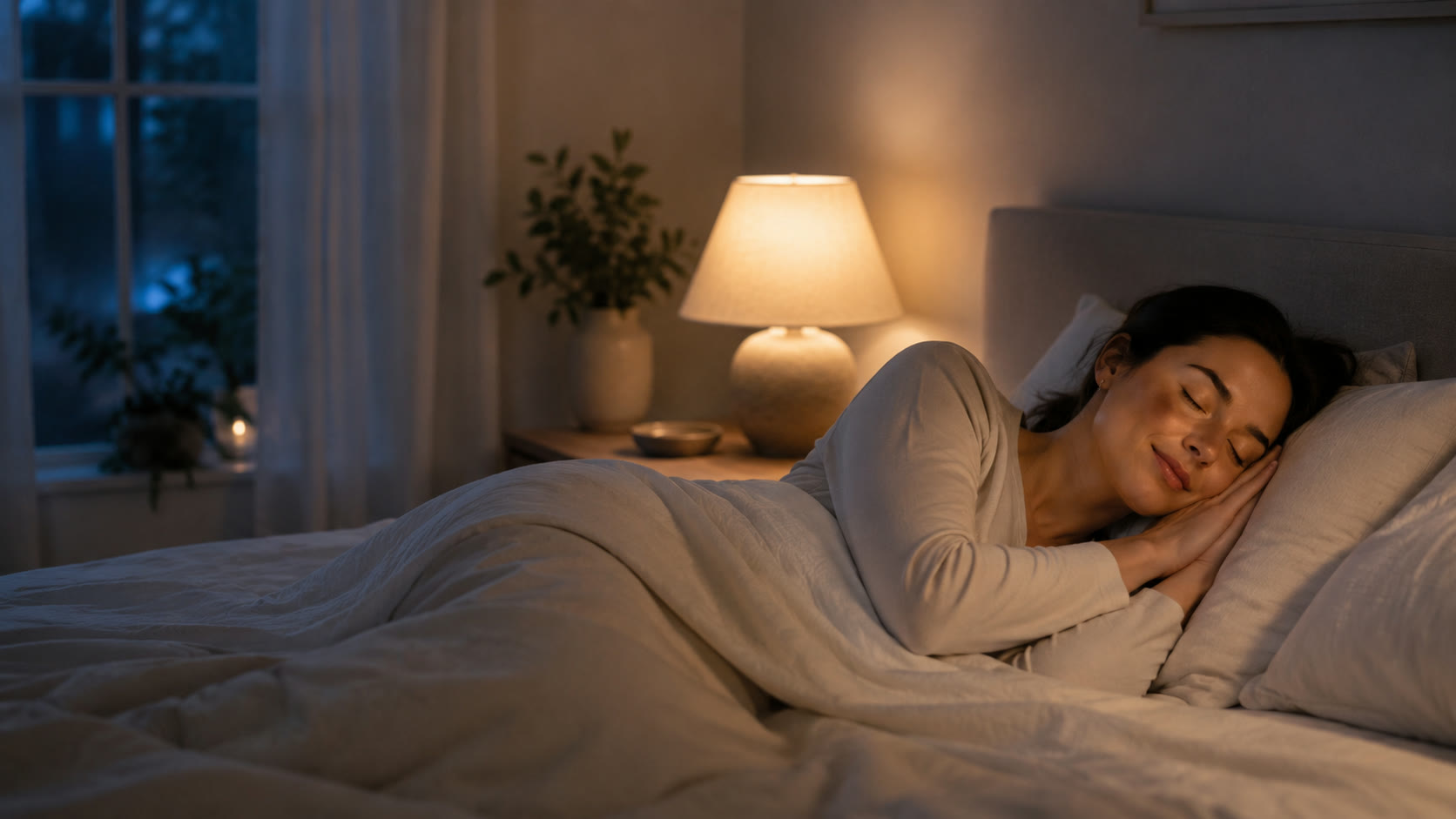
When Night Becomes the Dreaded Time
For many people with emetophobia, the day is manageable as long as you’re busy. But in the evening, when the bustle dies down and you have to lie down in the dark, the anxiety comes back hard. You monitor your stomach. You wonder whether you ate something dodgy. You dread waking up sick in the middle of the night, alone, with no way to warn anyone. You get up to check that the kids are sleeping fine, that they don’t look pale. You lie awake for hours, ears straining.
This fear of vomiting at night has a logic to it. And it also has solutions. This article explains why anxiety gets worse at this time of day, how lack of sleep keeps the problem going, and which concrete strategies help break the cycle.
Why Anxiety Climbs at Bedtime
Nothing Left to Occupy the Mind
The day provides a steady stream of distractions: work, conversations, screens, tasks. In the evening, all of that stops. The mind, suddenly free, turns toward what worries it. With nothing to occupy it, rumination takes over. This is a general mechanism of anxiety, not specific to emetophobia, but emetophobia pours straight into it: “what if I feel sick tonight?”, “that slight thing in my stomach, what is that?“.
Fatigue Weakens the Brakes
Regulating your emotions takes energy from the brain, particularly the prefrontal cortex, the area that tempers fear responses. By the end of the day, that area is tired. As a result, the amygdala (the alarm center) reacts more strongly and gets reined in less well. A worry that would have been manageable at 2 p.m. becomes overwhelming at 11 p.m. This isn’t “in your head” in the sense of you “overreacting,” it’s literally a brain with fewer resources to calm things down.
Lying in Silence, You Listen to Yourself
When you’re still, in the dark, with no noise, you perceive your own body much more precisely: your heartbeat, your stomach gurgling, a vague abdominal tension. For someone constantly scanning for the slightest sign of nausea, that silence is an amplifier. A sensation you wouldn’t even have noticed mid-activity becomes, while lying down, a worrying signal you keep watching.
The Stress Hormone Rises Toward Morning
Cortisol, the stress hormone, follows a 24-hour rhythm. It’s at its lowest early in the night, then rises gradually over the final hours of sleep to prepare you to wake. This natural rise can contribute to anxious early-morning awakenings, without anything having actually “happened.” If you often wake around 4 or 5 a.m. with a knotted stomach, that isn’t necessarily a sign of a problem, it’s partly physiology.
The Sleep-Anxiety Vicious Cycle
Anxiety stops you sleeping, and lack of sleep makes anxiety worse. The two feed each other.
On the research side, the effect of sleep loss on anxiety is well documented. One landmark study showed that after a sleepless night, the amygdala reacts roughly 60% more strongly to negative stimuli, with a weakened connection to the prefrontal cortex meant to regulate it. More concretely: a single night of poor sleep is enough to increase the stress, anxiety, and irritability you feel the next day, even in the face of minor annoyances. For a person with emetophobia, that means a night cut up by anxiety makes the next day harder, which raises the anxiety of the following evening. The cycle turns.
Good news: breaking the cycle at any point weakens it. Sleeping better reduces anxiety, and reducing evening anxiety helps you sleep better. You can start with either one.
Panic Attacks That Wake You at Night
Some people aren’t just anxious at bedtime, they wake abruptly in the middle of the night with a racing heart, a feeling of suffocating, intense fear. That’s a nocturnal panic attack. It’s more common than you’d think: among people with panic disorder, a large proportion report having had at least one attack during sleep.
A few useful markers:
- These attacks usually occur as you transition into deeper sleep, not during a dream. There’s no associated nightmare: you wake up already in alarm, with no “storyline.”
- They’re different from night terrors (which mostly affect children and which you don’t remember).
- Like all panic attacks, they’re very unpleasant but not dangerous, and they subside on their own.
- The main difficulty is getting back to sleep afterward, out of fear that another one will come. It’s that fear, more than the attack itself, that degrades sleep.
If you experience this kind of episode, the same steps as for a daytime panic attack apply: name what’s happening (“this is a panic attack, it’s not dangerous, it will pass”), slow your exhale, don’t fight the wave. The article on what to do during a panic attack details these techniques.
What Actually Helps
Get the Sleep Basics Right
Nothing revolutionary, but it lays the groundwork:
- Regular hours, including weekends. The body likes predictability.
- A dark, cool, quiet bedroom. Cool helps you fall asleep.
- No screens in the hour before bed, or at least in night mode. Light delays sleep onset, and the content (social media, news, messages) re-activates the mind.
- No coffee in the afternoon, and be careful with alcohol in the evening: it helps you fall asleep but fragments the second half of the night, exactly when the morning anxiety is brewing.
- The bed is for sleeping. Avoid spending hours in it ruminating. If you’re not asleep after about twenty minutes, get up, do something calm in soft light, and go back to bed when sleep returns. This keeps the bed from becoming, in your brain, “the place where I get anxious.”
Unload Your Mind Before Bed
If your evenings get flooded with “what ifs,” set aside a slot earlier in the day for that: 10 minutes, pen and paper, where you write down what’s worrying you and, if possible, what you can do about it. The idea is to “close the files” before night, so they don’t open by themselves once the light is off. A wind-down routine right before bed helps too: reading, gentle stretching, slow breathing, a bit of mindfulness.
Work on Breathing and Grounding in Bed
When anxiety rises once you’re lying down, lengthen the exhale: breathe in for 4 seconds, out for 6 seconds, for a few minutes. You can also do a slow “body scan,” bringing your attention to each part of the body from head to toe, without trying to change anything. The goal isn’t to force yourself to sleep (that never works), it’s to bring the nervous system back toward calm and to occupy the mind with something other than monitoring your stomach.
Don’t Give In to Nighttime Safety Behaviors
This is the classic trap. Keeping a bag or a bowl by the bed “just in case,” checking the kids ten times, sleeping with the light on, asking your partner to confirm they feel okay before lights out, googling your symptoms at 1 a.m. These safety behaviors bring relief in the moment, but they repeat to your brain, every night, the message “the danger is real, you have to stay vigilant.” That’s exactly what keeps nighttime anxiety going. Dismantling them, gradually, is part of the deeper work.
Reframe Evening Nausea
If nausea shows up as you’re getting into bed, remember what it usually is: anxiety nausea, or somewhat slow digestion, or fatigue. Lying down, you may even feel it a bit more, without that meaning anything. Nausea is not a countdown. It fluctuates, it passes, and the overwhelming majority of evenings when you’ve had that sensation ended with nothing. It’s the mechanism described in the article on the nausea-anxiety vicious cycle.
When Night Stays a Problem
If nighttime anxiety keeps you from sleeping over the long run, if you have repeated nocturnal panic attacks, or if you’re piling up nights under five or six hours of sleep, it’s worth talking to a professional. CBT, whether aimed at emetophobia or more specifically at insomnia (there’s a dedicated CBT for insomnia, highly effective), helps you get out of these cycles. A doctor can also rule out other causes (reflux, sleep apnea) that can disrupt nights independently of anxiety.
Tools to Support You
Apps like Calmena offer structured support for people living with emetophobia: relaxation and breathing techniques you can use at bedtime, graduated exposure exercises, an emotional journal, and progress tracking. These tools, inspired by CBT literature, provide an accessible framework for calming evening anxiety and working on the underlying issue, at your own pace, as a complement to professional support or while waiting to start.
This article is provided for informational purposes and does not constitute medical advice. If nighttime anxiety or insomnia sets in, or if you have repeated nocturnal panic attacks, consult a psychologist trained in CBT, or your doctor. Waking at night with a choking sensation can also stem from physical causes (reflux, sleep apnea) that warrant medical attention.